
Brain Rehabilitation with TMS: A New Option for Stroke, TBI, and Alzheimer’s Patients By Dr. Kanthiphas Pattaya
Ever wondered why physical therapy alone is so slow… That’s because the “switch” in the brain hasn’t been turned on! 🔌
 080-142-0052

Line ปรึกษาหมอกัณฒิภัสส์

แผนที่ google map
Loss of body control from stroke or memory decline from Alzheimer’s is no longer something to be accepted as fate. Currently, TMS (Transcranial Magnetic Stimulation) is a world-changing innovation that helps “reawaken” brain cells to function again.
What is TMS? Mechanism of Action on the Brain
Transcranial Magnetic Stimulation (TMS) is the transmission of high-energy electromagnetic waves through the skull to specifically stimulate nerve cells in the brain. The main mechanisms that make TMS effective are:
Neuroplasticity Enhancement: Stimulates the creation of new neural networks (synapses) and improves the efficiency of brain cell connections.
Modulation of Cortical Excitability: Balances brain function. If a brain area is underactive (e.g., in cases of paralysis), TMS stimulates it. If an area is malfunctioning (e.g., in cases of muscle spasms), TMS calms it.
Increased Cerebral Blood Flow: Improves blood flow to the stimulated brain areas, resulting in better oxygen and nutrient supply to brain cells.
Treatment covers 4 main disease groups:
1. Ischemic Stroke and Hemorrhagic Stroke:
TMS helps restore motor recovery and address communication disorders (aphasia). Research supports that combining TMS with physical therapy yields significantly better results than physical therapy alone.
2. Traumatic Brain Injury (TBI):
Helps restore consciousness levels. (Consciousness) Reduces chronic headaches and balances mood swings after accidents.
3. Dementia and Alzheimer’s Disease
Stimulating the dorsolateral prefrontal cortex helps slow brain cell degeneration, improves concentration, and allows patients to perform daily activities for longer periods.
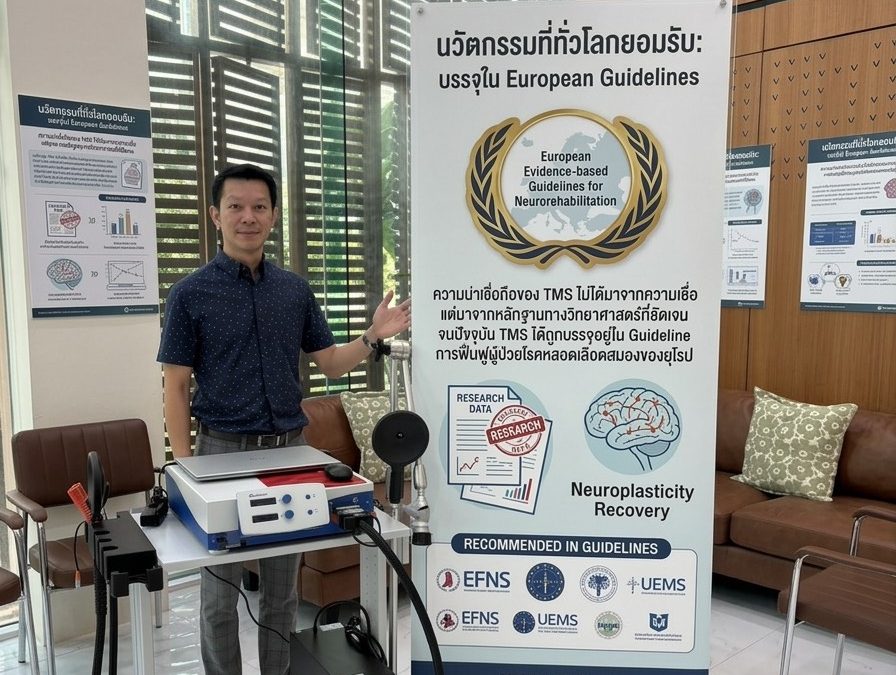
Globally Recognized Innovation: Included in European Guidelines
The credibility of TMS doesn’t come from belief, but from clear scientific evidence. Currently, TMS is included in the European Evidence-based Guidelines for Neurorehabilitation, recommended at the high-level evidence level as a safe and effective method.
Why choose “Doctor Kuntipat” in Pattaya?
We are ready to care for you with specialized treatment standards. By a team of doctors and specialists under 3 quality networks:
Doctor Kun Senior Health Clinic: Focuses on in-depth health rehabilitation for the elderly. 0801420052
Pattaya 2 Nursing Home Care: Provides 24-hour close care with continuous TMS rehabilitation programs. 0801420052
Pattaya 2 Internal Medicine Specialist Clinic: Diagnosis and treatment planning by expert internists for maximum accuracy and safety. 0833309366
“Because brain rehabilitation can’t wait. The sooner you start, the higher the chance of returning to a normal life.”
Q: Is TMS treatment painful?
A: No, it’s not painful. It feels like a gentle tap on the head. No anesthesia is required, and there’s no recovery time needed. You can return to your daily routine immediately after the procedure, under the care of our specialists. Dr. Kanthiphas Pattaya 2
Interested in consulting about TMS treatment?
If you or a loved one is facing a brain disorder, contact us for an initial assessment at:
Location: Dr. Kan Senior Health Clinic / Pattaya 2 Senior Care Center
Tel: 0801420052
Line: @pattaya2homecare
TMS Pattaya, Stroke Treatment Pattaya, Dementia Rehabilitation, Dr. Kanthiphas, Pattaya Internal Medicine Clinic, Stroke Physical Therapy